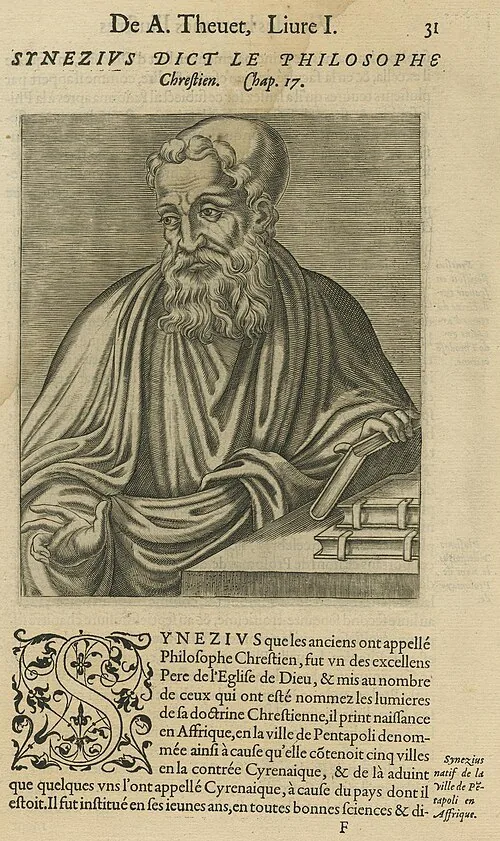
Letter 106. Synesius asks whether his brother grew the silphium sent to him and praises the garden.
Original text
Ancient GreekἨρόμην τὸ μειράκιον ὑπὲρ τοῦ σιλφίου πότερον ἀπὸ γεωργίας σοι γέγονεν, ἢ δῶρον λαβὼν ἔθου μερίδα κἀμοί. καὶ δῆτα μαθὼν ὡς τὸ σπουδαζόμενον ὑπὸ σοῦ κηπίον πρὸς ἅπασι καὶ τοῦτον ἐκόμισε τὸν καρπόν, ἥσθην διπλῇ, τῷ τε κάλλει τοῦ λαχάνου καὶ τῇ φήμῃ τοῦ τόπου.
ὄναιο τοῦ παμφόρου χωρίου, καὶ μήτε σὺ κάμοις ἐπαντλῶν ταῖς φιλτάταις πρασιαῖς, μήτ’ ἐκεῖναί ποτε πρὸς τὰς ὠδῖνας ἀπαγορεύσειαν, ἵν’ ἔχοις αὐτός τε χρῆσθαι καὶ ἡμῖν διαπέμπειν ὅσα φέρουσιν ὧραι.
English
New working translation for this atlasI asked the young man about the silphium: had it come to you from cultivation, or had you received it as a gift and set aside a portion for me? When I learned that the garden you care for1 had produced this yield too2, along with everything else, I was pleased twice over: by the beauty of the plant and by the reputation of the place.
May you enjoy that fertile plot. May you not tire of watering your beloved beds, nor may they ever cease to produce, so that you have enough for yourself and can send us whatever the seasons bring.
Further reading
- 01Denis Roques, “Synésios de Cyrène et le Silphion de Cyrénaïque,” Revue des Études Grecques 97 (1984), 218–231. ↗
A study focused on Synesius's letters and the problem of late silphium testimony. - 02Suzanne Amigues, “Le silphium — État de la question,” Journal des Savants (2004), 191–226. ↗
A close study of ancient evidence for the plant's range, identification, and later testimony.