Five texts in depth. Select a source to read its passage and locate its reported places.
Herodotus Histories 4.169
01
“On the mainland are Menelaus’s harbor and Aziris, where the Cyreneans lived; silphium begins there. Silphium extends from the island of Platea as far as the mouth of the Syrtis.”
“Silphium has a large, thick root. Its stalk is about the size and thickness of ferula, and its leaf, called maspeton, resembles celery. Its broad, leaf-like seed is called phyllon. Like ferula, it puts up a new stalk each year. In spring it sends out leaves that purge sheep, fatten them greatly, and make their meat remarkably pleasant.”
“For many years now it has not been found in that land, because the contractors who rent the pastures, finding greater profit in it, devastate the plant as fodder for their flocks. In our own time only one stalk was found, and it was sent to the emperor Nero. … For a long time the only laser reaching us has been what grows abundantly in Persia, Media, and Armenia.”
Translation for this atlas from the Latin · 19.38–40
“Now it is chiefly imported from Syria; it is poorer than the Parthian product but better than the Median, since all the Cyrenaic has disappeared, as noted earlier. The leaves of silphium are used in remedies to purge the womb and expel a dead fetus: they are boiled in fragrant white wine and a measure is drunk after a bath. The root helps a roughened throat and is applied to collections of blood.”
Translation for this atlas from the Latin · 22.100–101
“I asked the young man about the silphium: had it come to you from cultivation, or had you received it as a gift and set aside a portion for me? When I learned that the garden you care for had produced this yield too, along with everything else, I was pleased twice over: by the beauty of the plant and by the reputation of the place.”
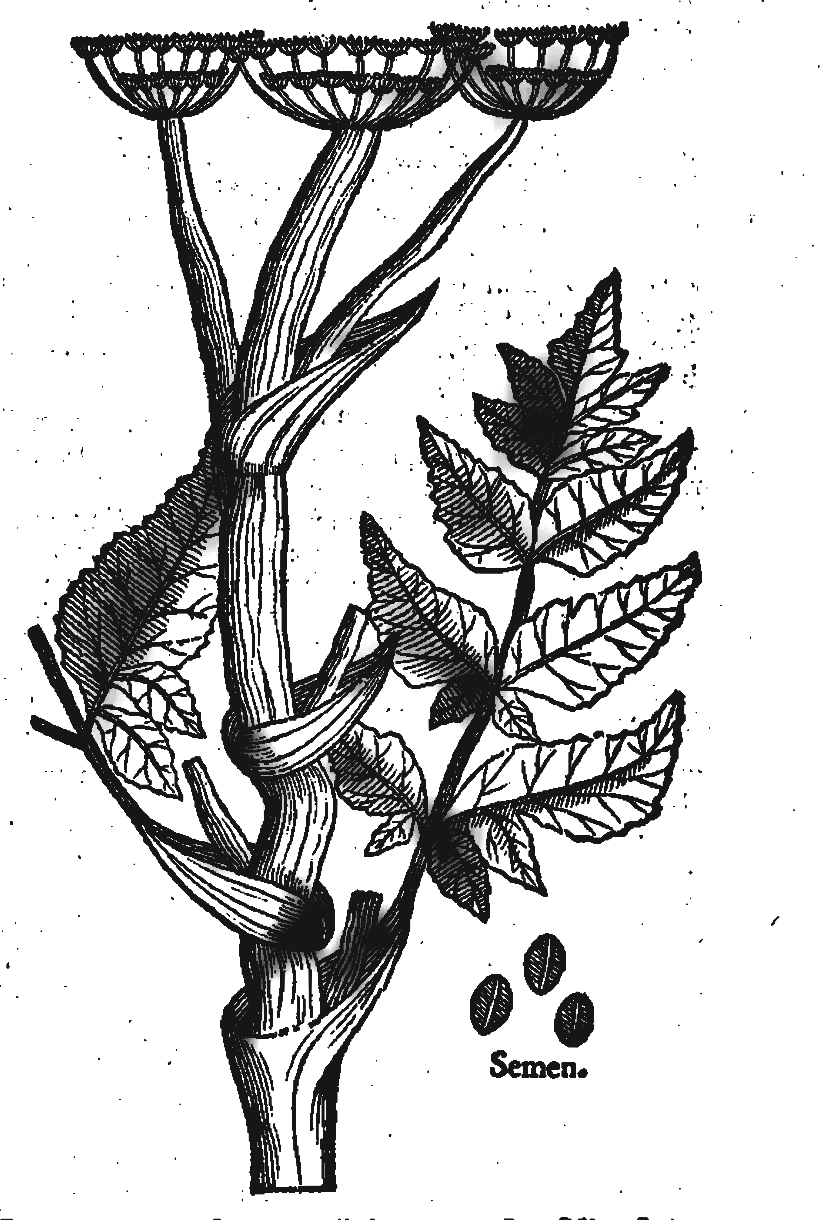
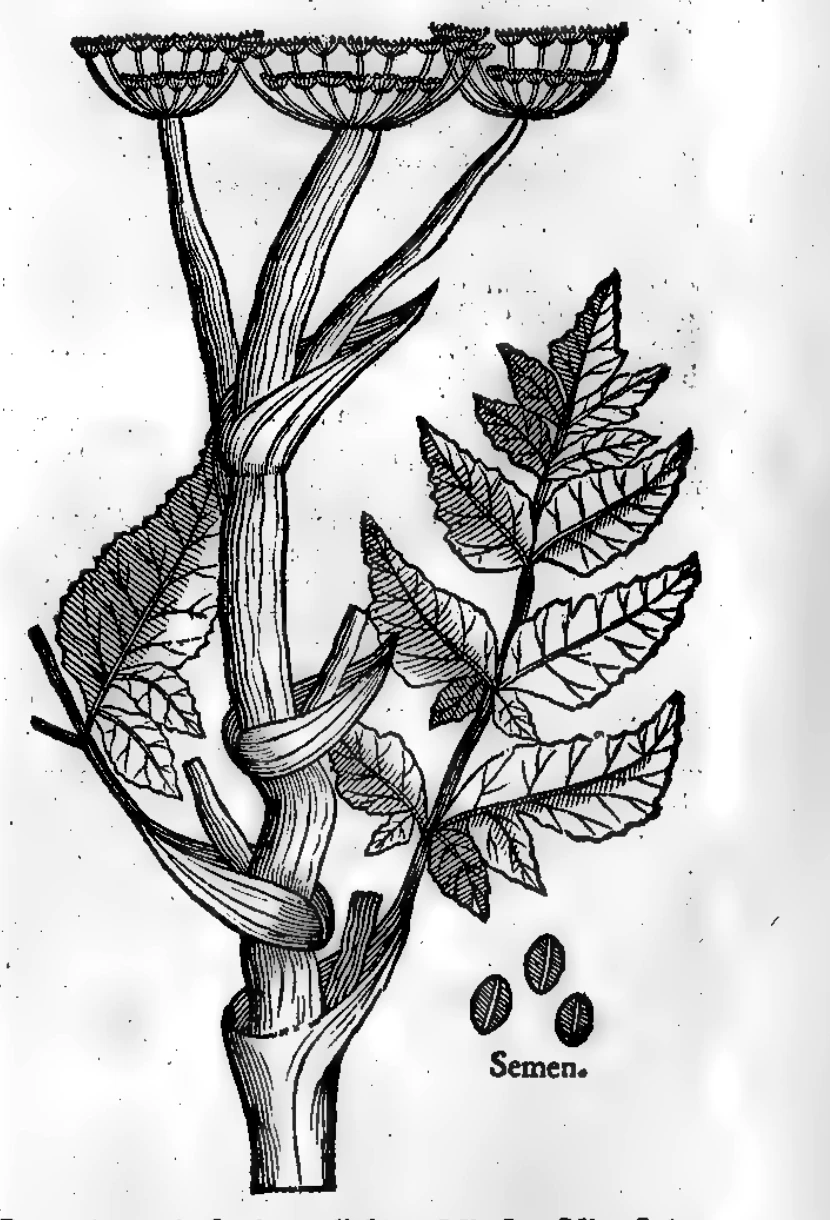
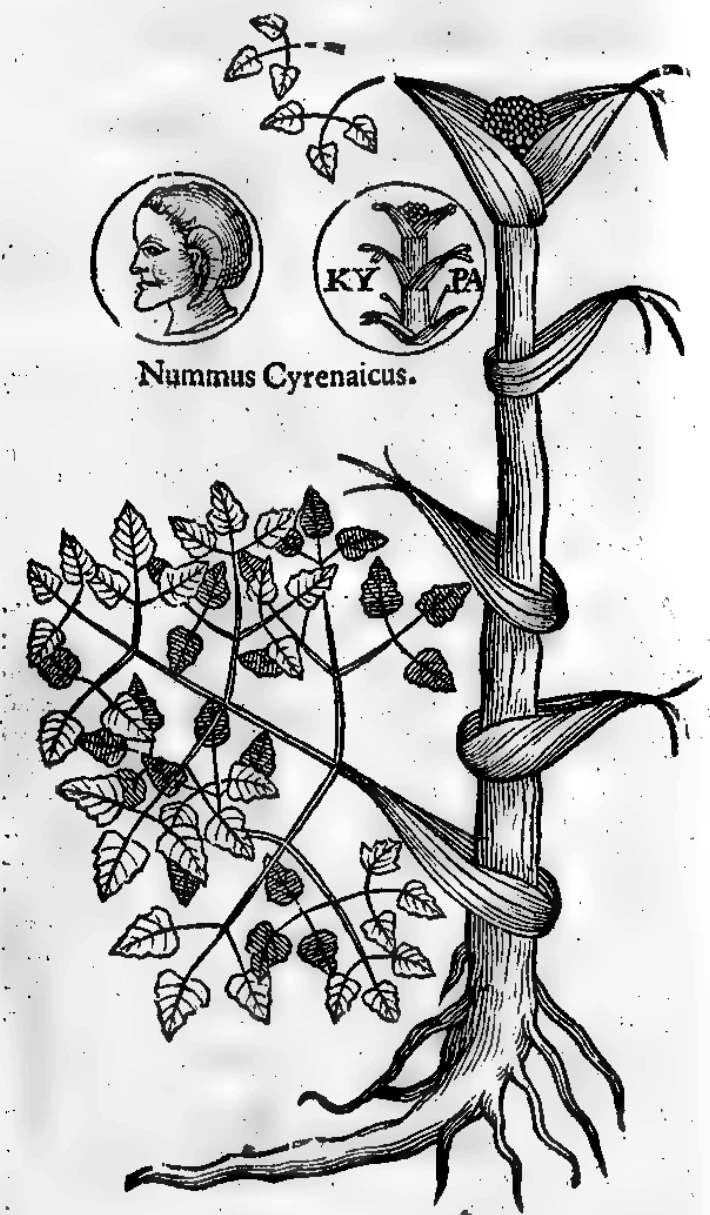
Two seventeenth-century woodcuts and the twelve files currently in Wikimedia Commons’ Cyrene silphium coin category ↗. The woodcuts are later identifications; the coins are ancient objects photographed or reproduced much later.
Laserpitium woodcut1644 · van Stapel, p. 598 · public domainWoodcut and coin comparison1644 · van Stapel, p. 598 · public domainCyrene coin illustrationBerthaud, 1907 · public domainTetrobol of MagasInternational Numismatic Club · CC BY-SA 4.0Cyrene tetradrachm435–330 BCE · ArchaiOptix · CC BY-SA 4.0Cyrene tetradrachm435–375 BCE · ArchaiOptix · CC BY-SA 4.0Cyrene tetradrachm480–460 BCE · ArchaiOptix · CC BY-SA 4.0Silphium and dolphins500–450 BCE · ArchaiOptix · CC BY-SA 4.0Didrachm of Magasc. 300–275 BCE · CNG Coins · CC BY-SA 3.0Gold coin of CyreneBnF · public domainGold coin of MagasBnF · public domainSilver tetradrachmBnF · public domainSilphium coin graphicCC BY 4.0 · see Commons creditCoin engraving1889 · public domain
The 1644 edition calls the first plant laserpitium from van Stapel’s garden. Neither woodcut verifies the appearance of ancient Cyrenaic silphium. Examine the original page ↗ Coin photographs and reproductions retain their file-specific credits; the licenses used here are CC BY-SA 4.0, CC BY-SA 3.0, and CC BY 4.0.
Textual record
Source index 11
Eleven passages indexed so far. Dates are approximate dates of composition, not dates of a sighting. Names and products need to be compared passage by passage.